If you have submitted a resume to a mid-sized or enterprise company in the last twelve months, there is a statistical probability of over 75% that a human being never laid eyes on it.
You spent hours agonizing over the font choice, the phrasing of your objective statement, and ensuring your margins were well aligned. You submitted it into the corporate portal, and within 400 milliseconds, an algorithm scanned it, scored it, deemed it irrelevant, and banished it to a digital graveyard.
Welcome to the realities of the job market in 2026.
The hiring process is no longer a human-to-human interaction at least, not initially. It is an algorithm-to-algorithm battlefield. Companies are inundated with thousands of applications, many of which are generated en masse by AI bots. To combat this, they employ aggressive Applicant Tracking Systems (ATS) and early-stage AI evaluators that are efficient at weeding out candidates who do not speak the language of the modern, automated workplace.
If your resume looks like a resume from 2023, you are unemployable to a modern tech-forward company. You are relying on a legacy format in an automated world.
To survive and thrive in this landscape, you must create an “AI-Proof” Resume. But it is not just about beating the ATS bots; it is about signaling to the human hiring manager on the other side that you are capable of surviving the AI transition. To do that, you must actively demonstrate proficiency in Agentic Tools.
This comprehensive, 2,500-word guide will dismantle why traditional resumes are failing, detail the exact “Machine-First” formatting rules you must adopt, and, most importantly, explore the five specific Agentic AI tools that will make hiring managers fight over you in 2026.
Part 1: The Death of the Traditional Resume Why Generalists Are Obsolete
Why the “Generalist” Is Obsolete
In the past, being a “quick learner,” a “team player,” and a “generalist” was a badge of honor. You were a Swiss Army Knife.
The harsh reality of 2026 is that AI is the main generalist. A standard Large Language Model (LLM) like GPT-4o or Claude 3 can write decent copy, analyze basic spreadsheets, draft standard emails, and debug simple code. If your primary value proposition is that you are “okay at a lot of things,” you are competing directly against software that costs $20 a month and does not require health insurance.
Hiring managers are no longer looking for humans to do the manual, repetitive labor. They are looking for humans who can manage the machines doing the manual, repetitive labor. They are looking for orchestrators, editors, and strategic thinkers.
The ATS Evolution: From Keyword Matching to Contextual Understanding
Five years ago, beating an ATS meant “keyword stuffing.” If the job description asked for “Digital Marketing,” you would blindly paste “Digital Marketing” in white, 1-point font at the bottom of your PDF to trick the scanner.
If you try that today, you will be blacklisted by the system. Modern ATS algorithms (powered by models similar to Gemini or Claude) do not just look for keywords; they look for semantic context and quantifiable impact.
If the job requires Python Data Analysis, the ATS does not just scan for the word Python. It reads the surrounding sentence.
- Bad: “Proficient in Python and data analysis.” (The AI flags this as generic).
- Good: “Utilized Python (Pandas/NumPy) to clean and synthesize 4M+ rows of customer data, reducing monthly reporting time by 14 hours.” (The AI identifies the tool, the context, and the quantified result).
Your resume must be “Machine-First, Human-Second.” It must be structured so cleanly and logically that a dumb parser can extract your data well, while still reading compellingly enough to convince the human recruiter who eventually reviews the top 5% of candidates.
Part 2: The “Machine-First” Formatting Mandate
Before we even discuss the skills to put on your resume, we must ensure the structure allows the ATS to actually read it. Creative, overly designed templates are career suicide in 2026.
1. The Single-Column Rule
Never use a two-column resume. ATS parsers read left-to-right, top-to-bottom. If you have a left-hand column with your skills and a right-hand column with your experience, the parser will read straight across the page, mashing your skills into your job titles and creating unreadable gibberish. Use a clean, single-column document.
2. Standardized Headers
Do not try to be clever with your section titles. The AI is specifically trained to look for standard markers.
- Do not use: “My Professional Masterpieces” or “Where I’ve Been.”
- Use : “Work Experience,” “Education,” “Skills,” and “Certifications.”
3. Ditch the PDF Graphics
Icons, progress bars to indicate skill level, and headshots completely break older ATS systems and confuse newer ones. A progress bar showing “4 out of 5 stars” in React means nothing to an algorithm. Remove all visual clutter.
4. The XYZ Formula for Bullet Points
Every single bullet point under your work experience must follow the XYZ format established by Google years ago, but supercharged for the AI era: “Accomplished [X] as measured by [Y], by doing [Z].”
- Weak: Handled customer service emails using AI tools.
- AI-Proof: Reduced average customer support ticket resolution time by 40% (X) resulting in a 15% increase in CSAT scores (Y) by deploying a customized RAG-based AI sorting agent to handle Tier-1 inquiries (Z).
Notice how the AI-Proof bullet point gives the algorithm the exact contextual phrasing and quantified metrics it craves.
Part 3: The 5 Agentic Tools Every Hiring Manager Wants
Now that your resume can actually be read by the machine, what does the machine (and the subsequent human manager) need to see?
They need to see that you understand Agentic AI.
Generative AI is a chatbot. You ask it a question, it gives you an answer. Agentic AI is a system that can take a high-level goal, break it down into steps, use digital tools to execute those steps, and correct itself if it makes a mistake. (For a deep dive into building these, read my post: How to Build Your First Autonomous Agent).
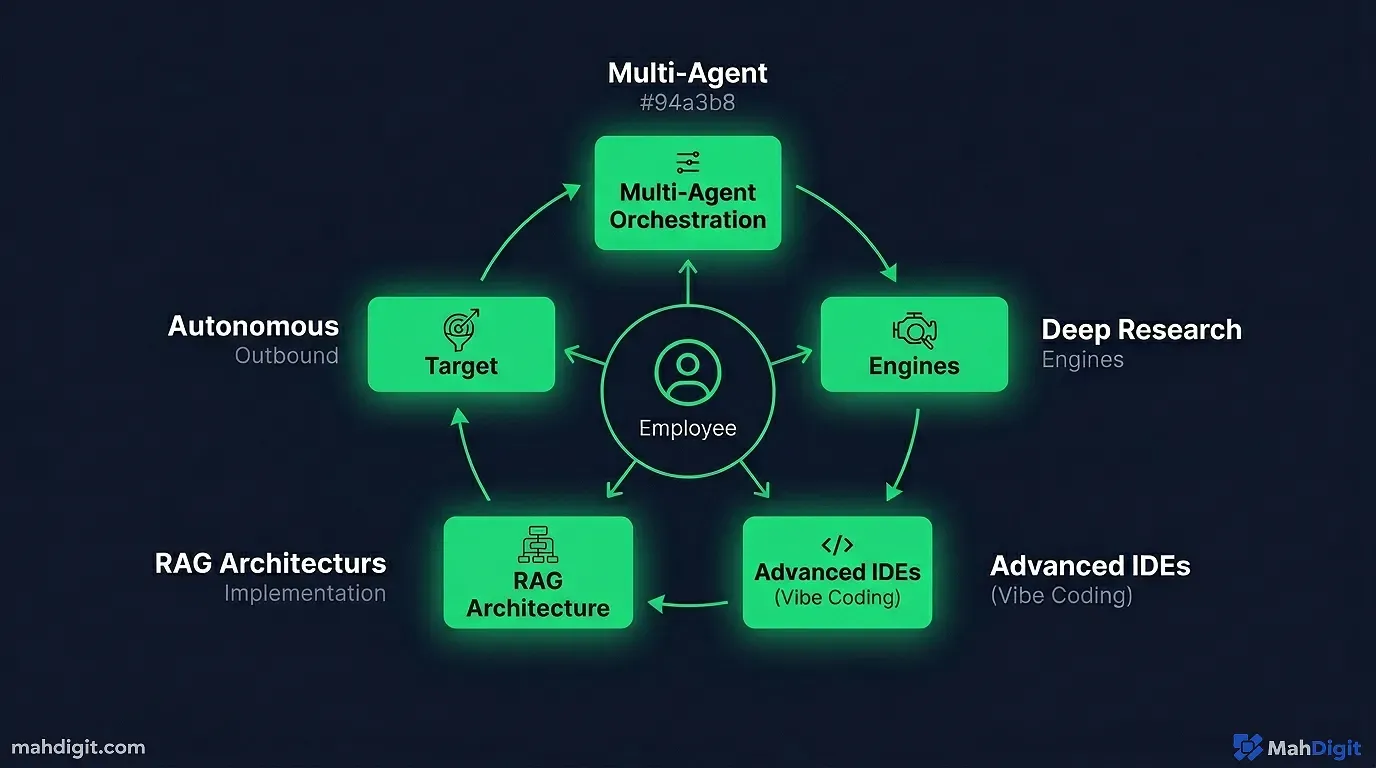
Hiring managers are actively looking for candidates who can build, manage, and audit these autonomous workflows. Here are the five specific agentic tools and frameworks you must showcase on your resume in 2026.
Tool 1: Multi-Agent Orchestration Platforms (n8n / Make)
What it is: The days of simple, linear Zapier triggers are fading for enterprise businesses. Managers need complex orchestration. Tools like n8n and Make.com (specifically their advanced AI routing features) allow you to build sprawling, multi-agent workflows. You can have an email-reading agent route a complaint to a data-gathering agent, which then passes context to a drafting agent, which finally sends a draft to a human for approval.
Why hiring managers care: This is the core of modern business leverage. A candidate who understands n8n can automate the workload of three junior employees. They are looking for “Operations Architects.” (I compare these specifically in my guide: zapier automation tutorial).
How to list it effectively (The “AI-Proof” Bullet Point):
- “Architected a complex multi-agent workflow using n8n, connecting a local vector database to the company CRM, resulting in the complete automation of 80% of routine lead-qualification tasks.”
Tool 2: Deep Research “Answer Engines” (Perplexity AI / Google DeepMind)
What it is: “Googling” is no longer an adequate research skill in 2026. Traditional search engine results are bloated with SEO spam. The professional standard for research is now deep “Answer Engines” like Perplexity Deep Research, which can autonomously scan 40+ PDFs, cross-reference data, and build cited, structured reports.
Why hiring managers care: If you tell a manager you use ChatGPT for research, they assume you accept surface-level hallucinations. If you tell them you use Perplexity Pro or advanced Web-Browsing Agents for synthesis, they know you understand the value of verifiable citations and deep data extraction. (See my full breakdown: AI tools for developers).
How to list it effectively (The “AI-Proof” Bullet Point):
- “Leveraged Perplexity’s Deep Research API capabilities to autonomously synthesize complex competitor financial reports, reducing weekly market analysis prep-time from 8 hours to 45 minutes.”
Tool 3: Advanced IDEs & Vibe Coding (Cursor / Windsurf)
What it is: You do not need to be a senior software engineer to put development tools on your resume anymore. Advanced Integrated Development Environments (IDEs) like Cursor and Windsurf allow non-technical operators to build internal tools using “Vibe Coding” guiding the AI through logic rather than writing manual syntax.
Why hiring managers care: Every department Marketing, HR, Finance needs custom micro-tools. If a marketing manager can open Cursor and prompt an AI to build a secure, internal dashboard for tracking ad-spend without begging the engineering department for resources, that candidate is infinitely more valuable than a traditional marketer. (Learn more about this shift in AI tools for developers).
How to list it effectively (The “AI-Proof” Bullet Point):
- “Utilized the Cursor IDE and agentic ‘Vibe Coding’ methodologies to independently build and deploy a custom internal SEO tracking dashboard using Astro and Tailwind, bypassing traditional IT bottlenecks.”
Tool 4: Retrieval-Augmented Generation (RAG) Architecture
What it is: RAG is not a specific software brand; it is an architectural framework. It is the process of taking a company’s private, messy data (like ten years of Notion documents and old Slack messages), putting it into a vector database, and allowing an LLM to search that specific data before answering a question.
Why hiring managers care: Generic AI is useless to a corporation because it does not know the company’s proprietary secrets. Hiring managers are desperate for candidates who understand how to structure corporate data so it can be fed securely into a RAG pipeline to build custom, accurate internal company agents.
How to list it effectively (The “AI-Proof” Bullet Point):
- “Designed the data-cleaning protocols for an internal Retrieval-Augmented Generation (RAG) system, structuring 5 years of chaotic product documentation into a format indexable by the company’s customized Llama-3 agent.”
Tool 5: Autonomous Outbound/Data Enrichment (Clay / Instantly)
What it is: In Sales, Marketing, and Recruitment, finding data is no longer the bottleneck. Tools like Clay integrate with dozens of data providers and use AI agents to autonomously scrape LinkedIn, find personal websites, synthesize the prospect’s recent blog posts, and draft a hyper-personalized email based on that specific synthesized data.
Why hiring managers care: Spray-and-pray cold emails are dead; spam filters caught up in 2025. Outreach must be hyper-personalized at scale. Candidates who understand how to use tools like Clay to enrich data via “waterfall” API methods and orchestrate personalized outreach agents are driving the majority of B2B revenue in 2026.
How to list it effectively (The “AI-Proof” Bullet Point):
- “Built an autonomous outbound pipeline using Clay and Instantly, utilizing web-scraping AI agents to enrich prospect data and trigger hyper-personalized email sequences, driving a 300% increase in meeting booked rates.”
Part 4: The Underrated Skill Ethical Auditing & Hallucination Management
Having AI skills on your resume is crucial, but it comes with a large red flag for employers: Liability.
In 2024, there were multiple high-profile incidents where employees used AI carelessly. Lawyers submitted fictitious legal cases fabricated by ChatGPT. Customer service bots hallucinated policies and offered customers non-existent refunds that companies were legally forced to honor.
Hiring managers are terrified of candidates who blindly trust AI output.
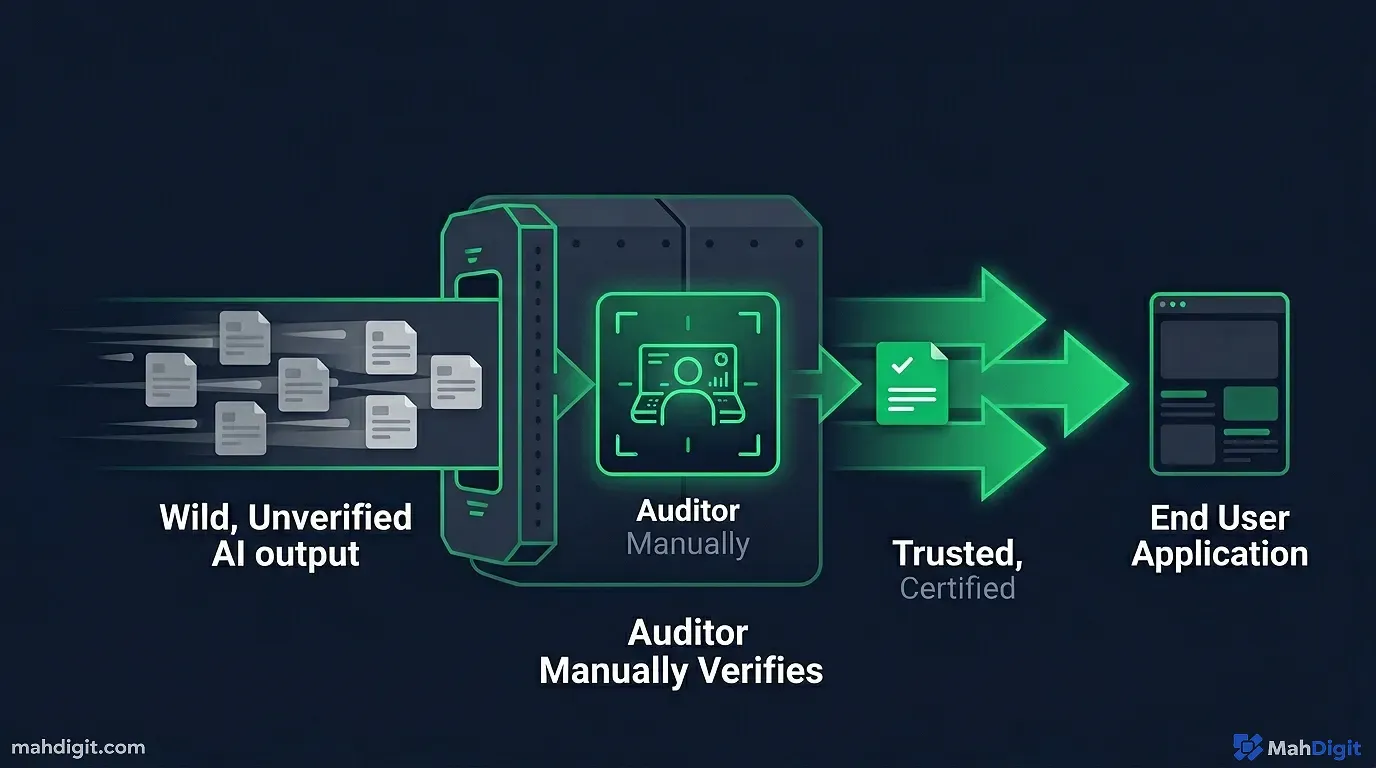
To make your resume truly “AI-Proof,” you must demonstrate that you are an Auditor, not just an Operator. You must prove that you understand “Human-in-the-Loop” (HITL) architecture.
You need to explicitly state in your resume or cover letter how you handle verification and data privacy.
Examples of “Auditor” Keywords to Include:
- Fact-checking pipelines
- Hallucination mitigation
- Human-in-the-loop (HITL) validation
- Generative AI compliance
- Data sanitization (PII masking)
The AI-Proof Auditor Bullet Point:
- “Implemented a strict Human-in-the-Loop verification protocol for all AI-generated client reports, ensuring 100% data accuracy and strict adherence to internal privacy compliance by masking all PII before LLM processing.”
This single bullet point will put you ahead of 90% of candidates who just slap “Expert in ChatGPT” on their skills list. It shows maturity, risk awareness, and a deep understanding of how AI actually functions in an enterprise environment.
Part 5: Optimizing Your Career Narrative (The Vibe)
Ultimately, an AI-proof resume is about more than formatting and software tools. It is about restructuring your entire professional narrative.
The traditional career narrative was: “I am an expert in X software, and I execute Y task.” The 2026 career narrative must be: “I am a systems thinker who orchestrates digital tools to solve Y business problem.”
Stop Listing Legacy Software as “Skills”
If you are listing “Microsoft Word” or “Basic Excel” on your resume in 2026, you are signaling to the hiring manager that your technical ceiling is incredibly low. These are no longer skills; they are baseline prerequisites for modern employment, akin to listing “knowing how to read.”
Remove the bloat. Use that valuable real estate to list modern frameworks:
- Replace: “Advanced Microsoft Excel”
- With: “Data synthesis via Pandas / Advanced LLM Prompting”
- Replace: “Proficient in Google Searching”
- With: “Contextual Information Retrieval / Deep Research Agents”
The Portfolio Proves the Resume
Because anyone can lie on a resume and anyone can use an AI agent to write a perfect resume hiring managers are increasingly demanding proof of capability.
If you claim to know how to build a RAG system or an autonomous n8n workflow, you need to prove it. Your resume should include a prominent link to a personal GitHub repository, a live web application you built, or a detailed case study outlining a workflow you optimized.
As I mentioned in AI tools for developers, the barrier to creating functional software and automations has dropped to zero. If you understand these concepts, build a Micro-App over the weekend that demonstrates them, and put that link at the top of your resume.
A link to a working AI agent that you built yourself is worth a thousand keyword-optimized bullet points.
Key Takeaways
The 2026 job market is ruthless to those who refuse to adapt, but it is incredibly lucrative for those who embrace the new tools.
- Format for the Machine: Single column, standard headers, no graphics. Make it impossible for the parser to misinterpret your data.
- Write for Impact: Use the XYZ formula. Strip away generic adjectives and replace them with hard, quantified numbers.
- Showcase the Agents: Move beyond basic chatbots. Highlight your ability to manage orchestration platforms (n8n), deep research tools (Perplexity), and unstructured data integration (RAG).
- Be the Auditor: Prove that you are the adult in the room who understands AI hallucinations, data compliance, and the critical importance of human-in-the-loop oversight.
The role of the human worker has officially shifted. We have been promoted from executing the tasks to managing the systems that execute the tasks. Upgrade your resume to reflect your new management position. The algorithms are waiting. Pair this resume strategy with a practical guide to automating social media with AI and a deeper look at AI prompting tips.
