I vividly remember the exact moment my fundamental relationship with the internet permanently broke. It was a Tuesday afternoon in late 2025. I needed to analyze the pricing structures of three obscure B2B SaaS competitors before launching my own micro-app.
Out of pure, ingrained habit, I opened a new Chrome tab, navigated to Google, and typed my heavily specific query. Google confidently presented me with “Ten Blue Links.” I clicked the first link. It was a 4,000-word, SEO-optimized blog post that took three paragraphs just to define the word “software” before burying a single, outdated pricing tier behind a large email capture popup.
I closed the tab in utter disgust. I opened Perplexity AI, engaged the new “Deep Research” toggle, and typed the exact same query.
Within 45 seconds, Perplexity did not give me links. It gave me a well formatted markdown table comparing the precise 2025 pricing tiers of all three competitors. Crucially, every single data point had a clickable footnote linking directly to the specific sub-page of the competitor’s official documentation where the AI found the number.
In under a minute, a mechanical agent had well executed a research task that would have manually taken me two agonizing hours of tab-switching and ad-dodging. I have not used standard Google Search for a complex informational query since that Tuesday.
For nearly twenty-five years, our relationship with global information retrieval was standardized. We typed a question into a minimalist white box, pressed enter, and blindly received ten blue links. We were then fully expected to open five separate ecosystem tabs, skim the bloated content, dodge intrusive auto-playing video ads, manually cross-reference the conflicting facts ourselves, and eventually synthesize our own coherent answer.
By 2026, the archaic concept of clicking ten blue links feels as primitive as manually looking up a local plumber’s phone number in a dusty Yellow Pages directory.
We are currently suffering through the violent transition from Search Engines directly to Answer Engines. While the trillion-dollar monolith of Google is trying to retrofit its large, ad-dependent infrastructure to accommodate this rapid consumer shift, a specialized, laser-focused tool called Perplexity (specifically its Pro “Deep Research” feature) has entirely redefined how ambitious professionals gather competitive intelligence.
If you are a university student, a financial analyst, a technical content creator, or a solo software founder, the fundamental way you search the internet is about to change. Here is a , entirely objective, head-to-head operational comparison of Perplexity Deep Research versus the modern incarnation of Google Search.
The Paradigm Shift: Why the 10-Blue-Link Era Died
To truly understand the large core difference between the two platforms operating in 2026, you must understand their opposing business models and financial objectives. Technology is merely downstream of the business model.
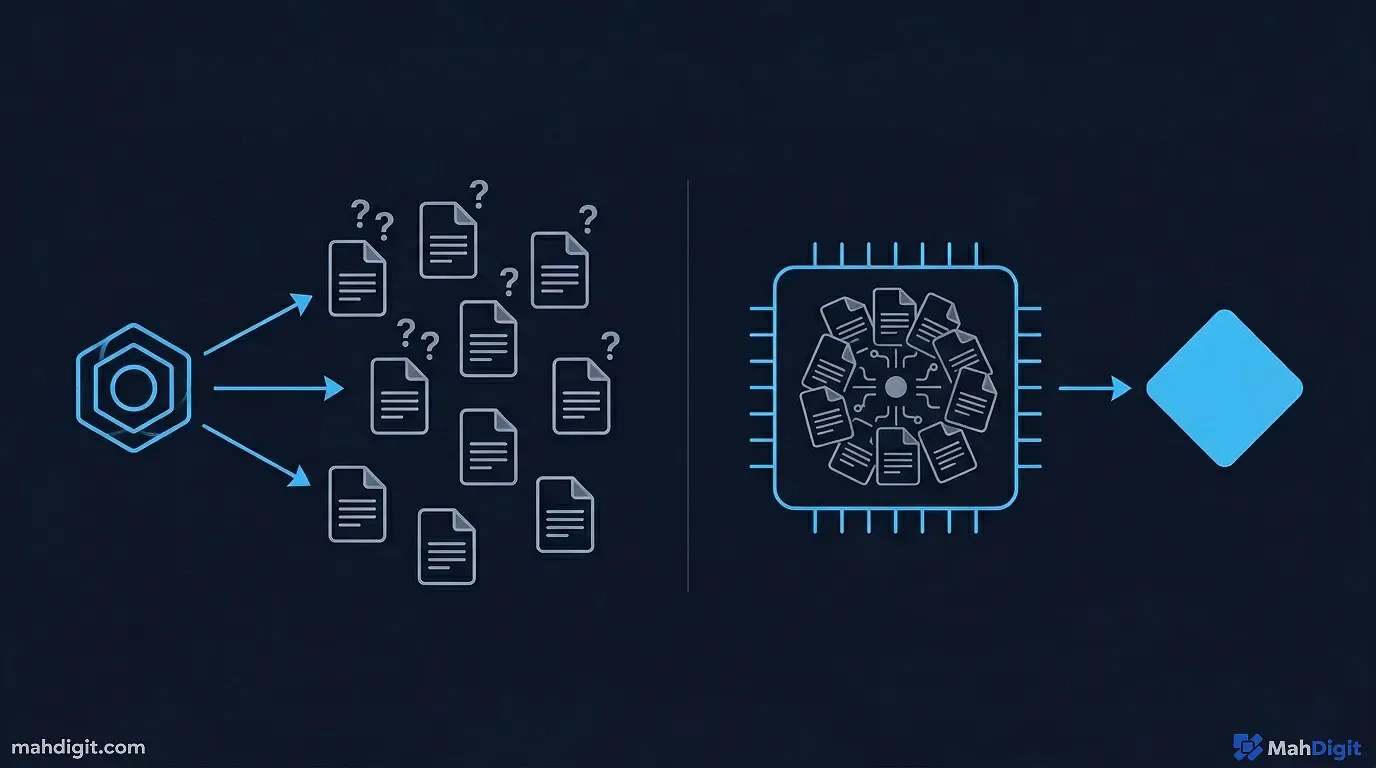
Google’s Core Objective: Physically connect you to an external webpage. Google intentionally creates friction. They make billions of dollars when you click a sponsored ad at the top of the search results, or when they safely deposit you on a publisher’s page that happens to be serving Google display banners. They need you to travel.
Perplexity’s Core Objective: Prevent you from ever needing to visit an external webpage. Because they make their revenue directly from your $20 monthly Pro subscription fee, their primary incentive is absolute user retention and operational speed. They want to give you the final, synthesized answer immediately so you remain satisfied within their walled garden.
Google wants to be your transit system. Perplexity wants to be your final destination.
The traditional search engine did not die overnight; it slowly choked on its own “content bloat.” As I discussed in my practical guide on AI prompting, the internet was utterly flooded with reverse-engineered, SEO-optimized garbage.
You would search for a simple chocolate chip cookie recipe, and Google would proudly serve you a 3,000-word essay about the author’s childhood vacations in Tuscany, because Google’s algorithm mistakenly interpreted “dwell time” (how long you scrolled down the page looking for the actual recipe) as a signal of high user engagement.
Users eventually stopped wanting links. They realized links are just homework. They wanted immediate, synthesized answers. This overwhelming consumer fatigue ushered in the era of “Zero-Click Search” where the user gets what they explicitly need directly on the primary results page and immediately closes the browser tab.
Contender 1: Google Search (AI Overview Mode)
Google understands the existential threat facing their core monopoly. They have rolled out “AI Overviews” explicitly powered by their large Gemini models to combat the rise of Answer Engines.
How Google AI Overviews Actually Work:
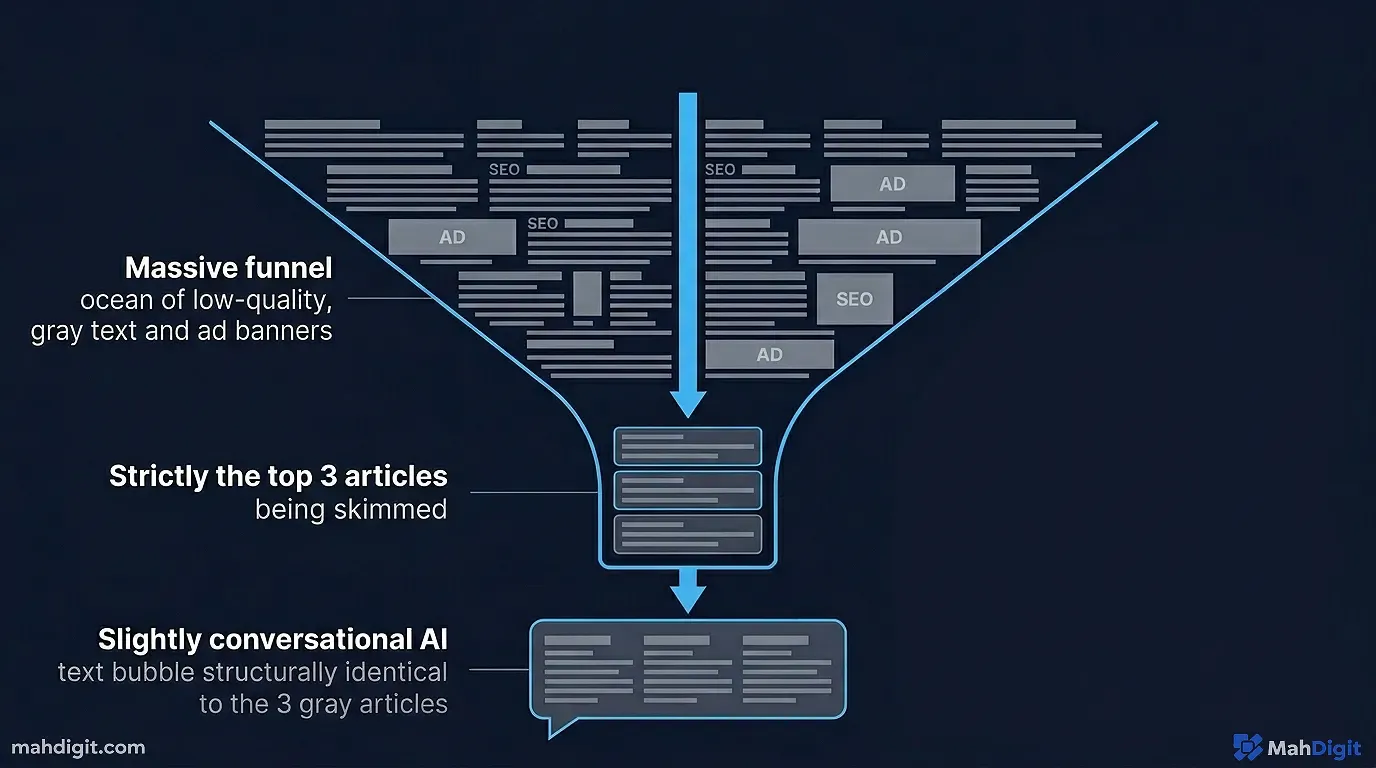
When you type a moderately complex query into Google today, you rarely get just the classic raw links. The Gemini AI rapidly reads the top three or four highest-ranking SEO articles, forcefully synthesizes a quick, conversational answer, and pushes the actual blue organic links far beneath the visual fold of your screen.
If I search “What is the difference between Astro and React?”, Google Gemini will confidently spit out a three-paragraph summary bullet-pointing the basic differences, heavily sourced from sites like StackOverflow or the official documentation.
Where Google Still Wins in 2026:
- “Navigational and Directory” Functions: If I urgently want to find an emergency plumber near my ZIP code, buy a specific pair of Nike running shoes in a size 10, or find the official secure login page for my regional bank, Google remains completely undefeated. Answer engines cannot process physical commerce intent effectively.
- Deep Ecosystem Integration: If I ask Google Assistant on my Pixel phone, “When is my flight to Chicago?”, it securely checks my private Gmail inbox, reads the Delta airlines receipt, plots the optimal driving route on Google Maps based on live traffic, and audibly tells me when to leave my house. Perplexity technically cannot pierce that walled garden.
- Visual Search Infrastructure: Google Images and Google Shopping are deeply indexed, structured visual databases that LLM-based text answer engines still struggle to replicate effectively. If you are searching for aesthetic inspiration, text-only outputs are not enough.
The Fatal Flaw of Google AI:
Google’s AI summaries are famously, frustratingly conservative. Because Google is a trillion-dollar public company terrified of regulatory backlash, their AI will notoriously refuse to answer anything vaguely controversial, financial, or medical (known in the SEO industry as YMYL: Your Money or Your Life).
Furthermore, their synthesis is incredibly shallow. Because it only summarizes the top three ranking SEO articles, it simply repeats the flawed, mainstream consensus. It is essentially just a Wikipedia summary, slightly rephrased to sound conversational. It does not conduct deep research; it conducts fast aggregation.
Contender 2: Perplexity Deep Research
If Google AI Mode is a lazy high-school student hurriedly skimming a textbook summary ten minutes before class, Perplexity Deep Research is a caffeinated Ph.D. candidate spending an entire weekend locked inside the university library archives.
How Deep Research Actually Works:
Deep Research does not execute a standard keyword query. You give Perplexity Deep Research a complex, multi-layered analytical prompt:
” analyze the Q3 2025 earnings reports for NVIDIA, AMD, and Intel. Contrast their explicitly projected future revenue derived specifically from AI data center hardware. Build a comparative markdown table highlighting the exact revenue discrepancies, and summarize the primary risk factors each CEO mentioned on their respective earnings calls.”
It does not just do one superficial search. It operates like an autonomous agent (a technical concept I dive into during my no-code AI automation guide).
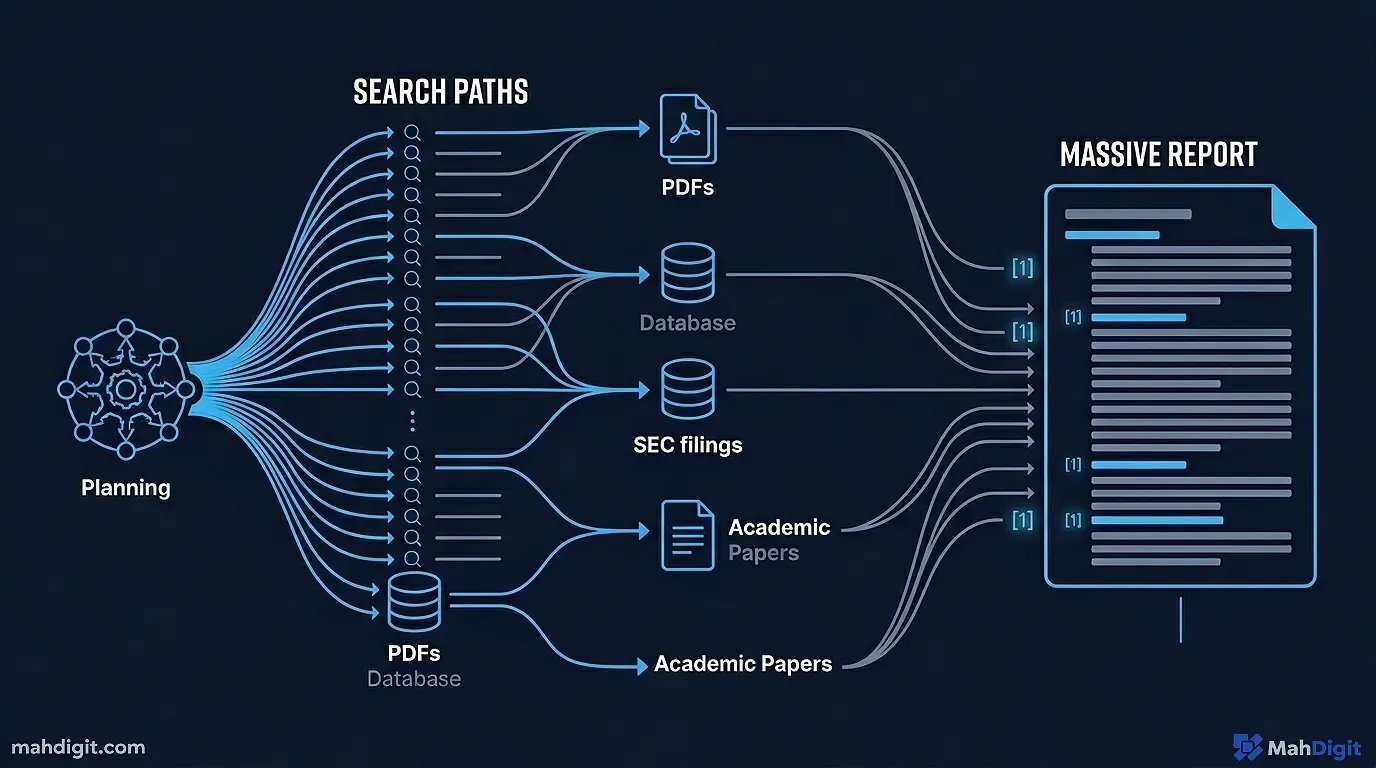
- The Aggressive Planning Phase: The AI outlines a specific, multi-step research strategy. It decides it needs to locate three specific PDF transcripts.
- The Parallel Search Execution: It simultaneously fires off dozens of distinct search queries, pulling down large PDFs, raw SEC financial filings, and hyper-recent Wall Street Journal analytical news.
- The Synthesis Engine: It reads all of the raw text, cross-references conflicting numbers between analysts, discards the marketing fluff, and meticulously writes a large, heavily structured financial report.
- The Ironclad Citations: This is the killer feature that destroyed Google. Every single statistical claim or quote in the final output has a tiny bracketed footnote
[1]that links directly to the exact source document. You do not have to blindly trust the AI; you can instantly verify the source data yourself.
Where Perplexity Deep Research Dominates:
- Unmatched Analytical Depth: It will gladly read 30 distinct, technical sources just to formulate a single, perfect answer. It bypasses the shallow, ad-ridden SEO articles and goes straight for official government documentation, raw data feeds, and dense academic papers.
- Zero Advertising Interference: Because it operates on a premium subscription model, the generated results are objective. There are no sponsored links secretly trying to skew the research output toward a paying vendor.
- Iterative Deep Dives: Once the large report is generated, you can highlight a specific, interesting paragraph and say, “Focus on this specific data center metric and run a completely new, targeted search comparing it against the historical 2024 data.” It remembers the context well and drills deeper. It is conversational research.
Feature Comparison Matrix
To make the stark differences clear, here is how the two platforms mechanically compare when placed under the stress of professional daily workflows.
| Feature Criterion | Google Search (AI Overviews) | Perplexity Deep Research |
|---|---|---|
| Core Business Model | Ad-supported (Click-driven) | Subscription ($20/mo Pro) |
| Information Depth | Shallow (Aggregates top 3 links) | Extreme (Synthesizes 30+ deep sources) |
| Citation Quality | Poor (Vague link carousels) | Ironclad (Inline footnote verifiability) |
| Commercial Intent (Shopping) | World-Class | Poor to Non-Existent |
| Speed to Answer | Instantaneous | 1 to 3 Minutes (Complex processing) |
| Best Used For | Finding a local pizza place | Conducting competitive market analysis |
If I need to buy a specific brand of coffee beans, I use Google. If I need to understand the complex geopolitical supply chain affecting the global price of those coffee beans over the next decade, I use Perplexity.
The SEO Impact: Generative Engine Optimization (GEO)
If you are a profitable blog owner, a niche media publisher, or an aggressive content creator, this large consumer shift is challenging. If Perplexity is reading your website in the background and giving the user the final answer directly within its own interface, the user is never clicking your link. You get zero website traffic. You make zero AdSense revenue.
This challenging reality has birthed an entirely new, technical industry in 2026: GEO (Generative Engine Optimization).
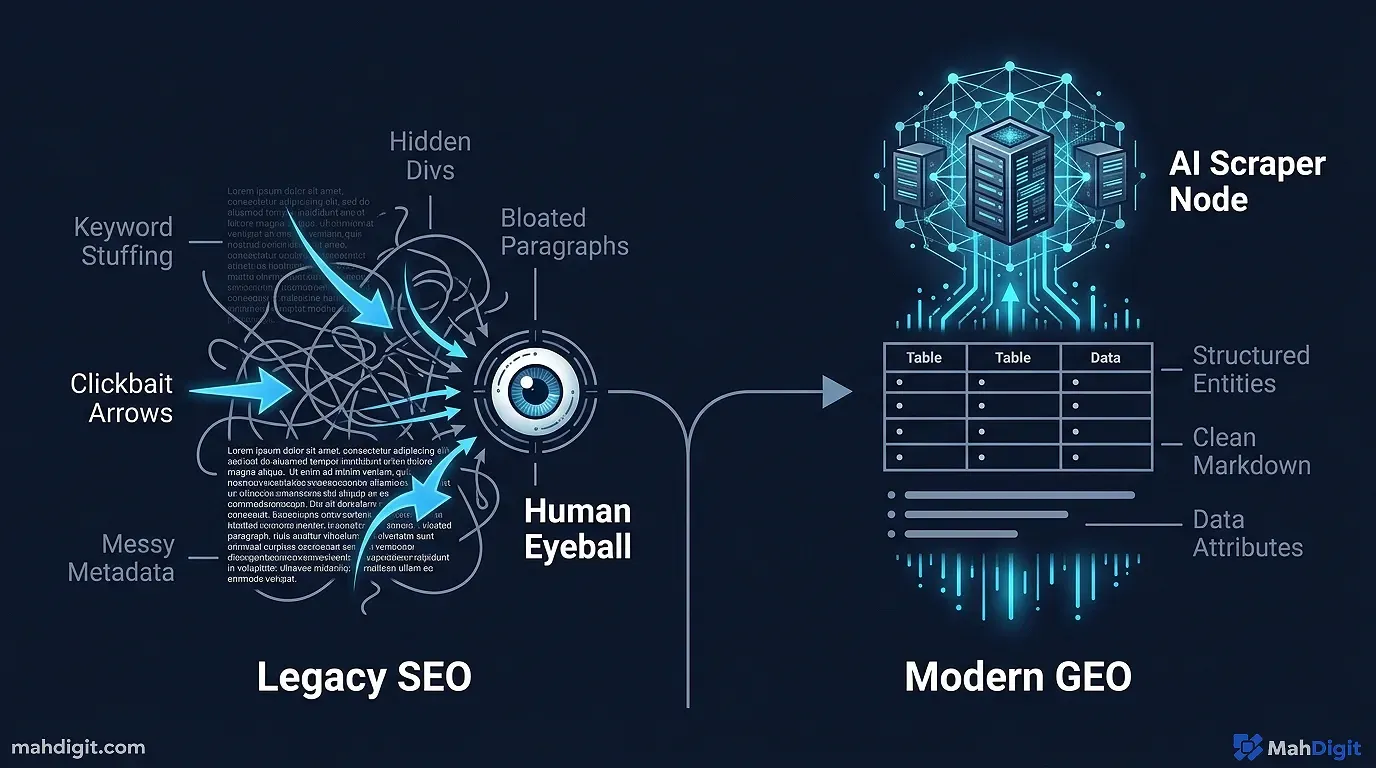
Instead of heavily optimizing your website structure to rank #1 on Google for an arbitrary long-tail keyword, you are now exclusively optimizing your website’s data structure so that Perplexity and Google Gemini are forced to cite you as the primary, authoritative source in their AI-generated answers.
How Do You Actually Optimize for GEO?
- Mechanically Kill the Fluff: Answer engines hate 500-word, self-indulgent introductions. They cannot parse them efficiently. They actively want dense, statistically heavy, structured data. Use markdown tables . Use bulleted lists. State your thesis in the first sentence.
- First-Party Data is King: If you lazily quote a software statistic you found on another blog like HubSpot, the AI will completely ignore your site and accurately trace the statistic back to its original HubSpot source. However, if you conducted the original survey of 500 developers and physically own the raw data, the AI is structurally forced to cite your specific URL.
- Opinionated Authority: AI models struggle to generate original, controversial opinions safely. If your blog contains specific, authoritative, experienced personal opinions (like my breakdown of Building an AI Workflow), the AI will cite your perspective because it cannot legally invent an opinion of its own.
The Verdict: Which Tool Survives?
Do not view this large technological shift as a bloody cage match where one specific tool has to die for the other to survive. View it as a necessary separation of daily use cases.
Use Google Search when:
- You actively intend to buy a physical consumer product.
- You are actively looking for a specific local business, restaurant, or driving address.
- You urgently need to log into a specific corporate portal or government website.
- You need real-time data integrated with your personal Google Workspace calendar or private emails.
Use Perplexity Deep Research when:
- You are actively writing an intensive academic paper or conducting deep market research for a business launch.
- You need to meticulously compare and contrast multiple complex software products, pricing tiers, or dense financial documents.
- You are trying to learn a technical coding concept that requires synthesizing multiple confusing developer documentation sites simultaneously.
- You require an objective, statistically verified answer actively free from corporate sponsored bias and SEO manipulation.
Key Takeaways
The archaic 10-blue-link era is entirely dead for complex informational queries. The internet has officially, permanently shifted from raw information retrieval to deep information synthesis.
- Understand the Financial Models: Google mechanically needs you to click links so you view their ads. Perplexity actively wants to keep you on their specific platform by providing the final, perfect answer directly.
- Google AI is Fast but Shallow: Google’s AI Overviews are fantastic for quick, surface-level summaries but rarely dive deeper than the top three ranking SEO articles due to processing costs and liability fears.
- Perplexity is an Autonomous Analyst: The premium “Deep Research” function operates like a human agent, conducting dozens of parallel searches and reading large underlying documentation to formulate a structured, professional report.
- Citations are the New Digital Currency: Perplexity’s strict, aggressive footnote-based citation system builds deep intellectual trust that Google’s conversational AI mode wildly lacks.
- SEO is Dying; Long Live GEO: Smart content creators must immediately stop optimizing for human clicks and start optimizing their raw data structure so Answer Engines can easily parse, understand, and formally cite their original research.
You no longer have to be the exhausted human manually stitching the scattered, biased pieces of the internet together. Offload the deep research phase entirely to the intelligent machines, and spend your valuable human time analyzing the synthesized results to make actual business decisions. Explore how these research skills fit into a larger workflow in my guides on getting started with ChatGPT and building an AI workflow.
