Hitting that first $100 mark with Google AdSense is a rite of passage for any publisher. I remember frantically refreshing my dashboard years ago, watching pennies slowly trickle in until that beautiful, round number finally appeared, meaning a check was actually coming in the mail. It felt like I had printed money from thin air.
I framed that first payout slip. It took me six months of writing generic articles manually to reach that milestone. I made every mistake you can possibly imagine. I wrote about everything from dog training to video game reviews on the exact same domain, confusing the search engines entirely. Today, using AI, you can accelerate the writing process by a magnitude of ten.
But the game has changed entirely. In 2026, the biggest hurdle is not earning the money; it is getting the AdSense account approved in the first place. You cannot just spin up a WordPress site, vomit thirty random AI articles onto it, and expect Google to hand you a monetization platform. Their review process is ruthless. They are specifically hunting for lazy AI content farms designed solely to siphon ad revenue.
Does that mean using AI disqualifies you? No. It means you have to use AI like a professional editor instead of a lazy copy-paster. I have helped dozens of beginners navigate this exact process. If you want to stop getting “Low Value Content” rejection emails and start seeing real RPM (Revenue Per Mille) metrics, this guide is your blueprint.
Setting Realistic Expectations Before You Apply
Before we start building, we need to address the elephant in the room: timelines. AdSense approval is not an overnight process. The review alone can take anywhere from three days to four weeks. Prior to clicking that “Apply” button, you need a mature, established site.
For a beginner entirely reliant on AI for initial drafting, I recommend a timeline of 30 to 45 days before you even submit an application. In that time, you need to publish between 15 and 30 incredibly high-quality articles, secure your technical foundation, and prove that you are an actual human being trying to help other humans.
If this sounds like too much work, you are in the wrong business. But if you are willing to execute this system, the returns are entirely passive once established. I currently have sites I have not touched in six months that reliably pay my utility bills every single cycle.
The AdSense Approval Algorithm (What Google Wants)
When you submit your site to AdSense, a combination of automated systems and manual human reviewers look at your digital property. They do not care how hard you worked. They care about risk mitigation. Google’s official AdSense eligibility criteria explicitly state that content must be unique, interesting, and provide value.
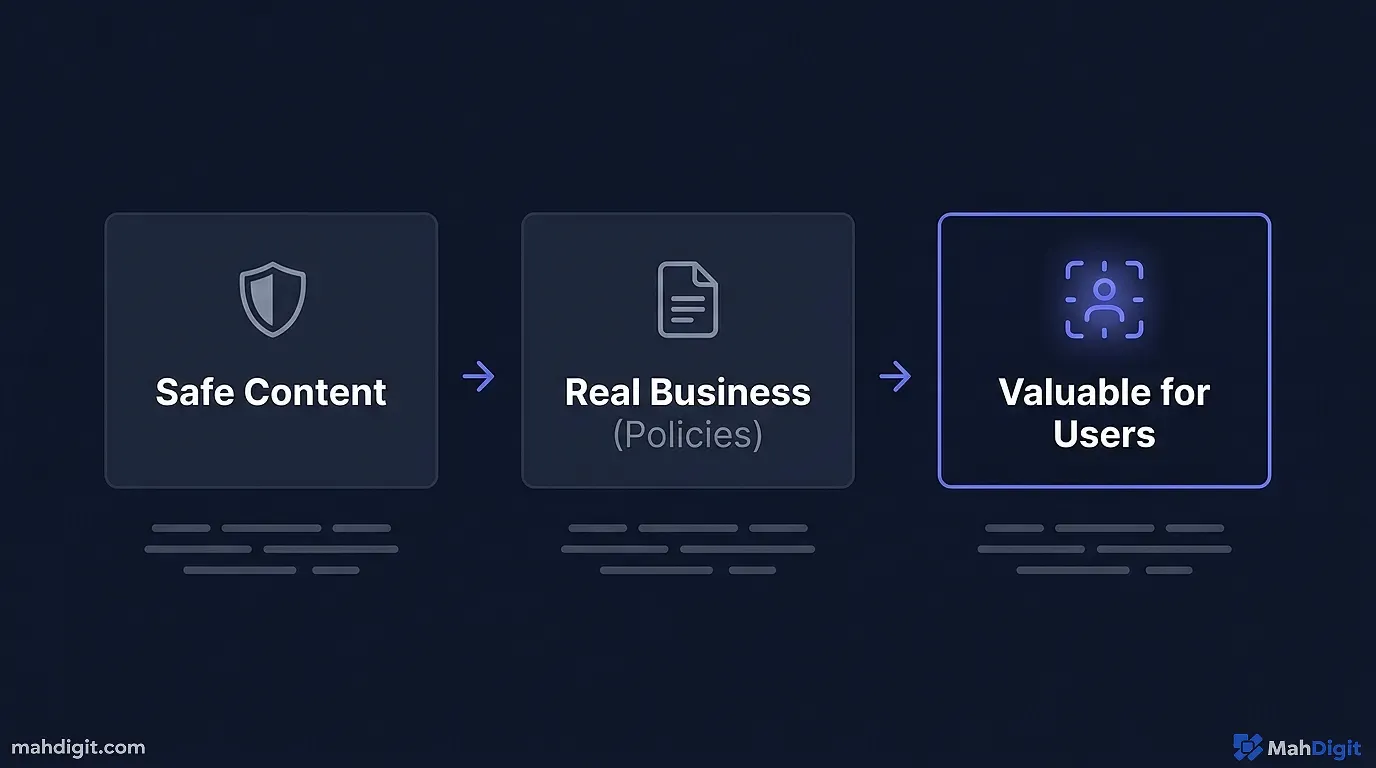
They are asking three questions when they land on your site:
- Is this content safe for advertisers? (No violence, no illegal downloads, no hate speech).
- Is this a real business? (Do they have a privacy policy, contact info, and clear navigation?)
- Does this site exist just for ads, or does it exist for users?
That third question is where 99% of beginners fail. If your site is 20 articles titled “What is a dog?” or “How to boil water,” the reviewer knows you are just trying to game the system. You have to demonstrate E-E-A-T (Experience, Expertise, Authoritativeness, and Trustworthiness). Ahrefs has an incredibly detailed breakdown of E-E-A-T that goes over the nuance of this. You need opinions. You need a specific niche.
Step 1: Picking a Micro-Niche That Pays
Do not start a general “Tech News” or “Health and Wellness” blog. You will be crushed by large media conglomerates. You need a micro-niche. More importantly, you need a micro-niche with high commercial intent, meaning advertisers are willing to pay top dollar for clicks.
The Problem with Low-RPM Niches
If you write about “cute cat videos,” you might get a million visitors, but your CPC (Cost Per Click) will be $0.02 because the only advertisers targeting that demographic are selling cheap cat toys. You want niches where software companies, financial institutions, or specialized hardware manufacturers are bidding for ad space.
Here are a few high-RPM examples for 2026:
- Specialized B2B Software (e.g., Inventory management for bakeries)
- Home Lab Server setups (e.g., Proxmox virtualization)
- Niche Automation (e.g., Zapier workflows for real estate agents)
For my recommended tools specifically for smaller operations, I usually point people towards AI for Small Business, which highlights high-leverage areas where people actually spend money.
Keyword Volume vs. Buyer Intent
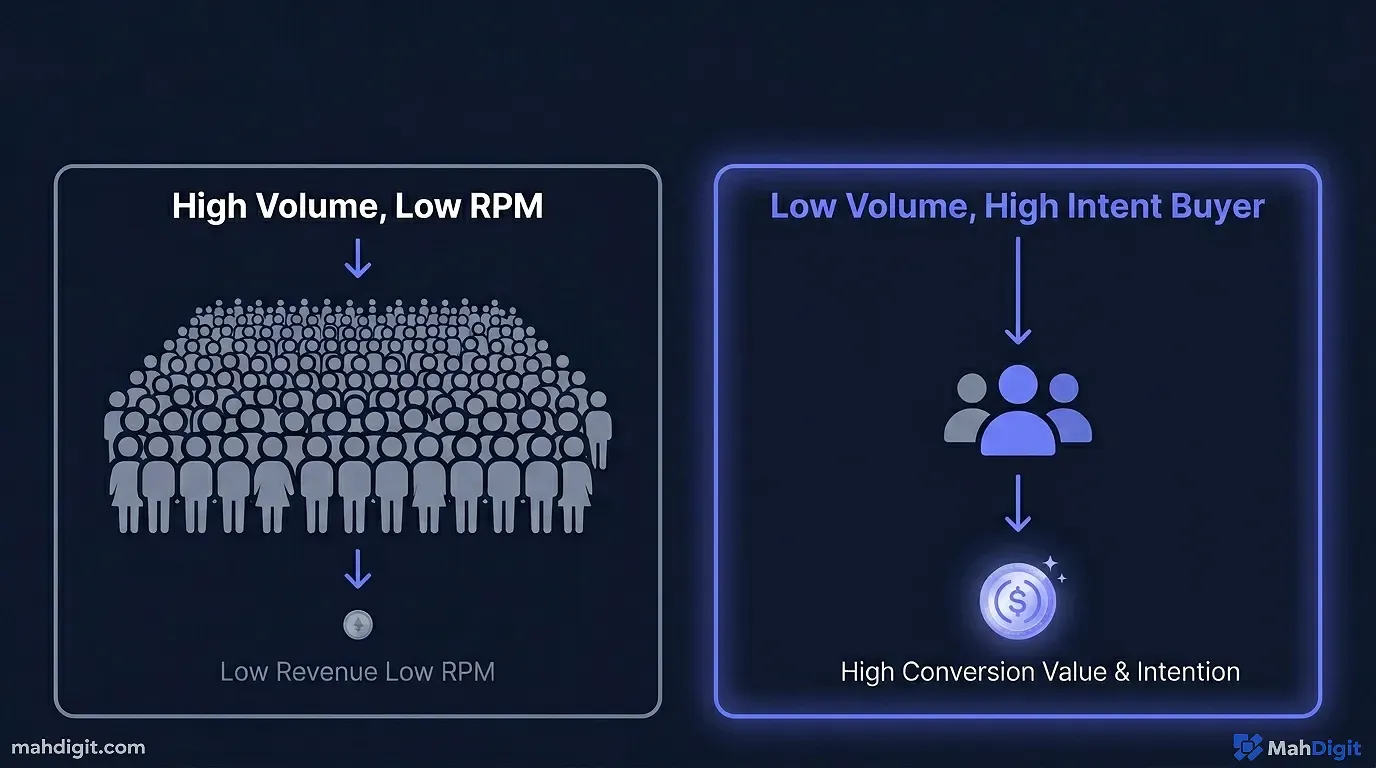
This is a large trap. I see beginners fixated on keywords with 100,000 monthly searches. “Best free games” has large volume, but zero buyer intent. Nobody clicking that link intends to spend a dime. Therefore, advertisers will not bid on it, and your AdSense account will make pennies.
Instead, I target keywords with under 500 monthly searches but large commercial intent. “Best AI CRM for independent realtors.” The volume is tiny. But a software company selling a $200/month CRM is willing to pay $15 for a single click on that specific article. I would rather have 100 targeted visitors than 10,000 bored teenagers. You must configure your AI ideation prompts to specifically hunt for buyer intent.
Step 2: The “Seed Content” Strategy
You have your niche. Now you need content. Your first 15 to 30 articles are your “Seed Content.” This is not content designed to go viral; this is content designed to prove to a Google reviewer that you are a legitimate authority.
I do not write these randomly. I structure them intentionally.
The Pillar Post
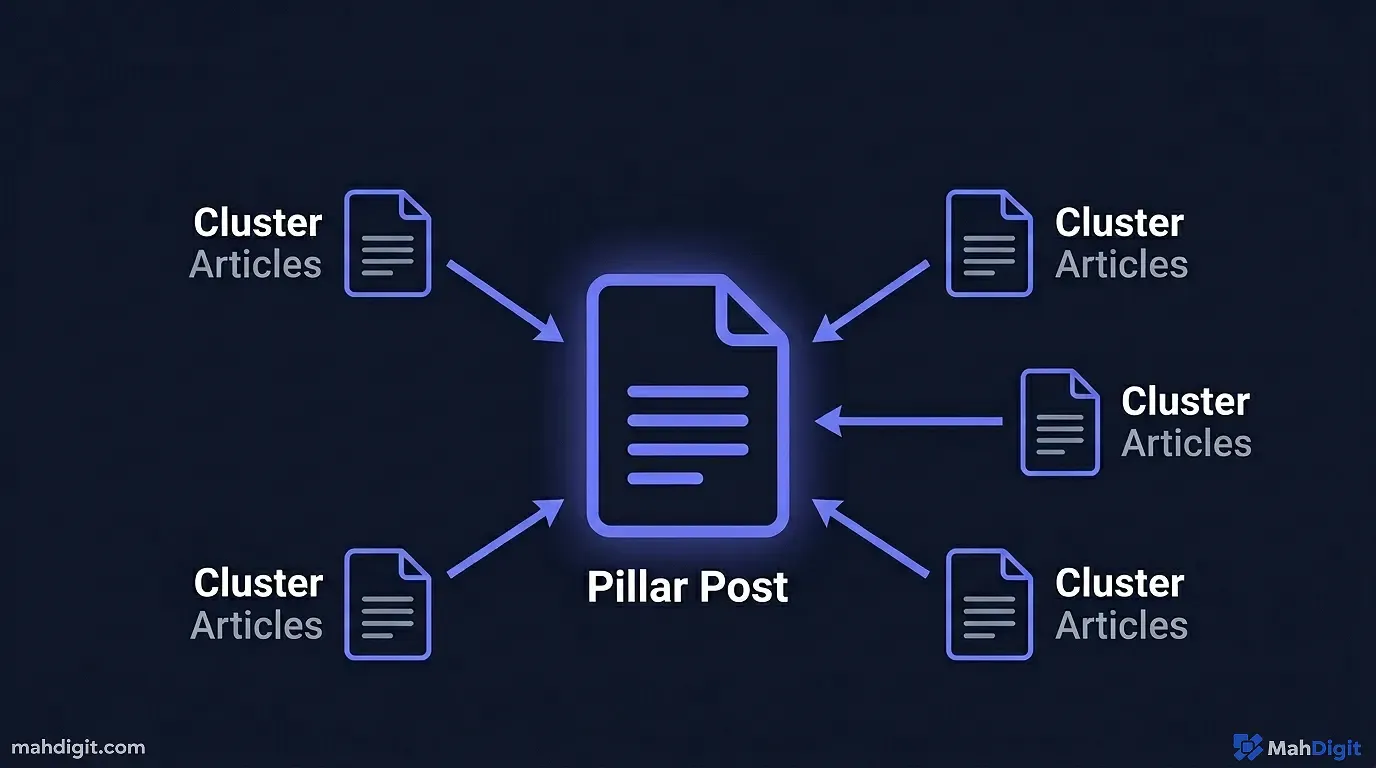
Your very first post should be large. I am talking 3,500 to 5,000 words. This is your “Pillar Post.” For example, if your niche is “Notion Templates for Writers,” your pillar post is “The main Guide to Managing a Novel in Notion.”
This article must be a masterpiece. Do not just ask a language model to dump text. You must painstakingly break down every step, include dozens of original screenshots of your actual workspace, and provide downloadable templates. This single article proves you are an expert. I once published a 6,000-word pillar post on advanced email automation that alone got an entire site approved.
The Supporting Clusters
The next 14 to 29 articles should directly relate back to the Pillar Post. These are your cluster articles.
- “How to Track Word Counts in Notion Formulas”
- “Notion vs. Scrivener: Why I Switched in 2026”
- “Why Notion Databases Are Slow (And How to Fix It)”
If a manual reviewer sees a tightly knit web of specific, intertwined articles, they see an expert sharing deep knowledge, not a spammer vomiting random keywords.
The Internal Linking Mandate
If you do not connect these cluster articles to your pillar post, you fail. Every cluster article should link back up to the main guide, and ideally, back to each other. This creates a “hub and spoke” model. Google Search Central’s guide on site structure underlines why clear navigation pathways matter, not just for bots, but for the actual human reviewing your application.
I built a site two years ago that was denied three times. The content was brilliant, but there were zero internal links. It looked like an orphaned list of random pages. I spent three hours hyperlinking the articles to one another, reapplied, and was approved immediately.
Step 3: Prompting for Approval (E-E-A-T Injection)
This is where beginners shoot themselves in the foot. They open a chat interface and type: “Write a 1000 word blog post about tracking word counts in Notion.”
The result is a bland, robotic essay that sounds like a Wikipedia article written by an alien. It has zero human experience. Reviewers spot this instantly and hit the reject button. For a detailed breakdown on the absolute best language models to use right now, read my ChatGPT vs Claude vs Gemini guide.
We have to force the AI to write from a position of experience. I call this E-E-A-T Injection.
The Before and After Prompt Reality
Let me show you the difference between a lazy prompt and an E-E-A-T injected prompt.
The Lazy Prompt: “Write about fixing slow Notion databases.” Resulting AI Text: “Notion databases can sometimes experience latency. It is important to optimize them by reducing properties. This ensures smooth operations.”
That text is boring, generic, and will get you rejected.
The E-E-A-T Injected Prompt: “Act as a frustrated project manager who just spent three hours fixing a bloated Notion database. Write an aggressive, fast-paced paragraph explaining why having 50 relation properties destroys page load speed, and what happened to your team meeting when the database froze.” Resulting AI Text: “My entire weekly sprint planning meeting ground to a halt yesterday because my primary Notion database froze. I had stacked fifty different relation properties tied to large rollups, thinking I was building a masterpiece. Instead, the page load latency spiked to ten seconds. Do not do this. Strip out unused rollups immediately if you want your team to actually use the tool.”
The difference is staggering. The second version features pain, experience, and a definitive voice.
The Beginner AdSense Prompt Template
When generating your drafts, use this exact framework to force the AI out of its generic default voice.
I am writing an article for my specific blog on [Insert Micro-Niche]. The topic is: [Insert specific, long-tail title].

Act as a cynical veteran in this industry. Write a 1,500+ word draft.

CRITICAL RULES:
1. Use the first-person ('I', 'me', 'my').
2. Frame the entire article around a specific problem a beginner would face, and how my personal experience solves it.
3. Clearly indicate where I should add original screenshots and visual examples.
4. Include a section explicitly outlining the limitations or flaws of the solution we are presenting. (Nothing is perfect; showing flaws builds trust).
5. Do not use corporate jargon or generic conclusions.
If you need a refresher on the basics of these systems before diving into advanced prompting, refer back to the core concepts in my guide on What Is AI Explained.
The Mandatory Human Review
Once the AI spits out the draft, your work begins. You cannot publish the raw output. You must:
- Write the first paragraph yourself. Always. The hook must be a real story.
- Take the screenshots. A blog with zero original imagery is a large red flag. Take screenshots of the software, photos of the hardware, or draw crude diagrams. Original media proves you actually did the work.
- Format . AdSense reviewers hate walls of text. Keep paragraphs to a maximum of three sentences. Use bolding to make the article scannable.
If you are looking for free tools to help manipulate images and structure your site before spending any money, check out my list of Best Free AI Tools.
Step 4: The Mandatory Technical Checklist
I have seen people with incredible content get rejected because their site looked like it was built in 1998. Your technical infrastructure must signal trust. Do not apply until every single one of these boxes is checked.
- HTTPS is active. If your site says “Not Secure” in the search bar, you are instantly rejected.
- The Core Legal Pages. You must have a Privacy Policy, Terms & Conditions, and a Disclaimer linked in your footer. Generate these specifically for your site; do not just copy-paste from another blog wildly.
- An Authentic ‘About’ Page. Explain who you are, what your background is, and why you started the site. Include a picture of a human face. It does not have to be your real face if you are using a pen name, but it cannot be a glaringly obvious AI generation with six fingers.
- A Functioning ‘Contact’ Page. Put a real email address or a working contact form.
- No Empty Categories. If your site menu has a category for “Reviews,” and I click it and see an empty placeholder notice, that is an instant rejection for incomplete construction. Remove the category until you have content for it.
The Economics of the First $100
Let us talk numbers so you understand the reality of what it takes to actually earn that initial hundred dollars. This is not a get-rich-quick scheme. I want you to look closely at how different your required traffic levels are depending entirely on your chosen topic.
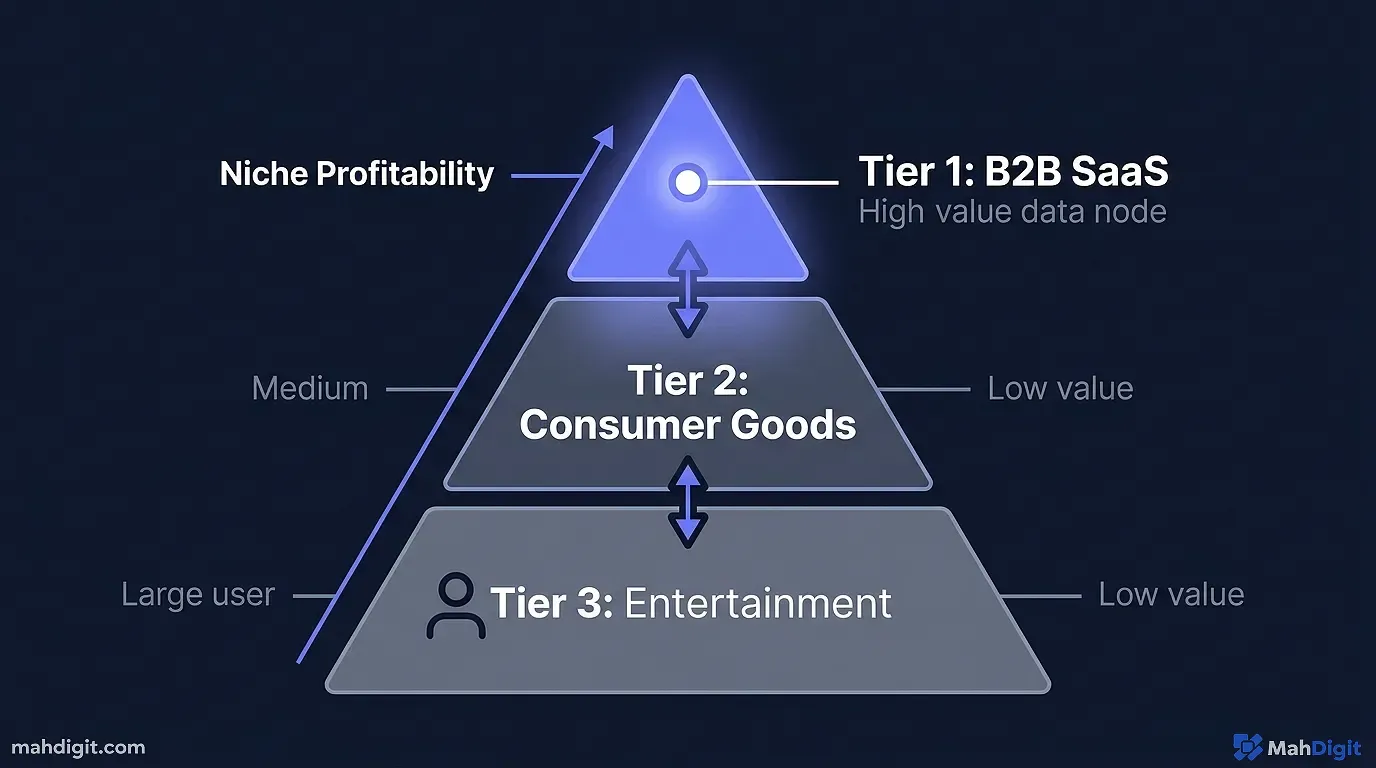
| Niche Tier | Example Subject | Average Expected RPM | Pageviews Needed for $100 |
|---|---|---|---|
| Tier 3 (Entertainment) | Gaming Memes | $2.00 | 50,000 |
| Tier 2 (Consumer Goods) | Budget Coffee Makers | $8.00 | 12,500 |
| Tier 1 (B2B SaaS) | Real Estate Lead Gen AI | $35.00 | ~2,800 |
Note: RPM (Revenue Per Mille) translates to how much you earn per 1,000 page views. This fluctuates wildly based on advertiser demand, user location, and ad placement.
If you choose a terrible niche, you will need 50,000 people to look at your site just to make your first hundred bucks. Getting 50,000 organic visitors takes months, sometimes years, of grinding. If you choose a high-RPM niche, you only need a fraction of that traffic. Work smarter in the ideation phase, and the math becomes easier later on.
Common Mistakes That Guarantee Rejection
I review amateur websites constantly. The same mistakes pop up every single time. If you do any of these, Google will send you the dreaded “Site Behavior: Navigation” or “Low Value Content” email.
- The “Everything” Blog: Writing one article about crypto, one about gardening, and one about fitness. You have zero topical authority. Pick one lane and stay in it.
- Zero Original Media: Using the same free Unsplash stock photos everyone else uses. It looks cheap. Reviewers check for this. I have seen large engagement spikes simply passing my own terrible smartphone photos through a mild filter instead of using generic corporate stock art.
- YMYL Violations: YMYL stands for “Your Money or Your Life.” If you start giving out medical advice, legal counsel, or financial investment strategies without verifiable credentials, you will be permanently blacklisted. Stick to hobbies, software, or verifiable tutorials.
- Obvious AI Watermarks: Leaving phrases like “As an AI language model…” in the published article. It shows you did not even bother to read your own draft. This happens more often than you think.
Key Takeaways
Making your first $100 with AdSense is entirely possible in 2026, but the barrier to entry requires actual effort. AI is an accelerator, not a replacement for a brain.
- Treat approval as a 30-day project. Do not rush. Build a foundation of 15 to 30 high-quality articles first.
- Target high-RPM micro-niches. Avoid broad topics. Focus on specific software, hardware, or B2B pain points where advertisers spend heavily.
- Build a central Pillar Post. Establish your authority immediately with an epic, comprehensive 3,500+ word guide.
- Structure interlinking tightly. Never leave an article orphaned. Link your cluster content back to your main pillar posts to guide both users and manual reviewers.
- Do not use raw AI output. Force the AI to use a specific persona, and mandate that you manually write the intro and inject personal anecdotes.
- Original media is mandatory. Take your own screenshots or photos. Do not rely entirely on stock imagery.
- Perfect your technical SEO. Ensure your site is fast, secure, and has all the necessary legal and contact pages prominently displayed.
- Avoid YMYL niches. Do not give medical or financial advice unless you are a licensed professional.
- Review your final output aloud. If a sentence sounds like a corporate robot wrote it, delete it immediately.
The days of automated spam blogs are dead and buried. The future belongs to creators who use AI to outline and draft rapidly, but who take the time to edit and insert genuine human experience. Build the site for the reader, and the AdSense approval will take care of itself. Then, those $100 payouts will start coming in consistently. To go deeper, explore my guides on getting started with ChatGPT and building an AI workflow.
